Commercial · Country Hills
Commercial-Grade Lock Replacement in Country Hills
The key to the office entrance turns with almost no resistance now, and some mornings the deadbolt does not fully retract until someone jiggles the handle and tries the key again.
Commercial-Grade Lock Replacement
In plain words
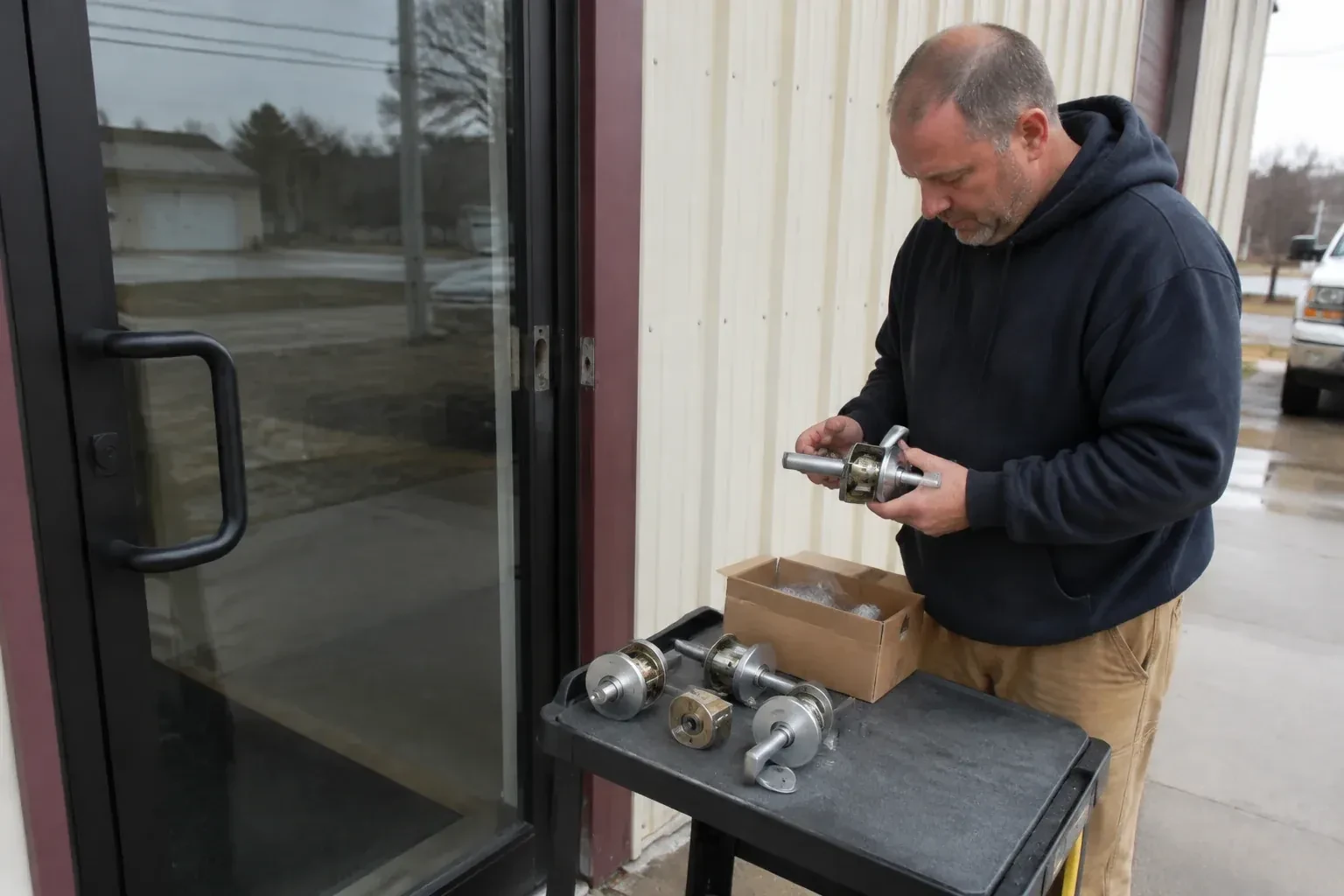
A great deal of what happens during this service is choosing the right category of hardware before a single screw comes out. Storefront glass and aluminum doors call for a narrow-stile lock or a hookbolt rather than the mortise body a solid wood or hollow-metal door would take, and a door serving a busy exit route may need listed exit hardware regardless of what was on it before. The locksmith identifies which category the opening belongs to, sources hardware built for it, installs it to the door's existing preparation, and confirms the finished lock operates correctly from both the public and the staff side.
How the visit goesAt closing time the hookbolt on the storefront door catches the keeper only on the second or third try, and one employee has started giving the door a shoulder to force it home.
Country Hills
How the visit goes
Checking how the current lock fits the business's key system
Every commercial building runs some kind of keying logic, even an informal one, and the locksmith maps it before touching hardware: is this cylinder on the same key as other doors, does it belong to a master or grand-master system, is it a standard keyway or a restricted one that only a specific supplier can cut? Getting this picture first means the new hardware can be ordered to slot into that structure, onto a fresh structure the business wants instead, or left standing alone if that is genuinely what is wanted.
Selecting hardware built for this opening
With the assessment complete, the locksmith orders hardware to match: a mortise lock body for a mortise-prepped door, a heavy cylindrical lockset for a standard bored door, or a narrow-stile lock or hookbolt for an aluminum storefront. Where the door is part of a fire separation or a required exit, the hardware chosen is listed for that rating and function rather than a general-purpose substitute. Grade and finish are matched to the traffic the door takes, so a heavily used delivery door gets hardware built for that duty rather than the lightest option available.
Ready for the next security decision
With current hardware and an accurate key-control record in place, the business is better positioned for whatever comes next: adding a location to the master key system, upgrading a single door to an interchangeable core so staff can rekey it without a service call, or answering an insurer's or landlord's question about what security is on a given door. None of that requires starting from scratch, because the replacement visit leaves behind hardware and documentation that a future decision can build on directly.
Commercial-Grade Lock Replacement
In the van
- Key-control log and tags
- Key cutting and coding machine
- Mortise prep and installation tools
- Strike plates and keepers
- Hookbolt and deadlatch hardware
What affects the quote
Same fees day, night or weekend
1Removal of old hardware
Whether old locks, cylinders and strikes are left with the business, disposed of, or kept as spares for a wider system is a small choice that can affect the time and scope named in the quote.
2Number of keys cut and issued
Keys are counted individually into the quote. A small office needing a handful of keys is a smaller line item than a multi-shift operation issuing keys to a large staff roster.
3Fire-rated or listed hardware requirements
A door that is part of a fire separation needs hardware listed for that specific rating, which is a narrower and typically costlier category than general-purpose commercial hardware, and the quote reflects that requirement rather than a standard substitute.
Commercial-Grade Lock Replacement: questions
Does an electric strike need to match a specific lock function?
Yes. An electric strike has to suit the latch or deadlatch type it will receive, the door's handing and swing, and whether the application needs fail-safe or fail-secure operation, meaning whether the door should unlock or stay locked if power is lost. Choosing a strike without checking these against the mechanical lock is a common reason a door releases electronically but still binds mechanically.
How long does commercial-grade lock hardware typically last under heavy use?
It depends heavily on cycle count and how the door is treated day to day, but hardware graded for commercial duty is built to outlast the internal wear that sinks a residential lock on the same door. A delivery door opened hundreds of times a shift will still wear its hardware faster than a quiet office entrance, so grade and use should be matched from the start rather than assumed.
What should I do with the old hardware once it is replaced?
That is entirely your choice. Some businesses keep old hardware briefly in case a spare part is needed elsewhere on the same system, others prefer it removed from the site straightaway, particularly after a break-in where the damaged pieces are no longer wanted around. The locksmith can leave it with you or take it away, whichever you prefer.
Commercial Locks
- Master Key System DesignAfter a busy shift the manager counts the keys coming back in and loses track of who still has one.
- Access Control InstallationYou just leased the empty unit next door and want the new tenant to open their own suite without a…
- Panic & Exit HardwareThe new access-control reader at the staff entrance works fine going in, but nobody has sorted out…
Commercial-Grade Lock Replacement near you
Homes in Country Hills bring us sticking deadbolts, lost keys, moves and upgrades. Businesses bring storefront doors, back doors, key control and safes. The services below cover both sides in detail, so whichever kind of door you are standing in front of, the right page is a click away.