Change or rekey · Kitchener
Mailbox Lock Replacement
The little brass key for your curbside mailbox was on the same ring as the one you lost at the gym last week. The lock itself is fine, but whoever finds that ring now has a way into your mail as well.
Mailbox Lock Replacement
In plain words
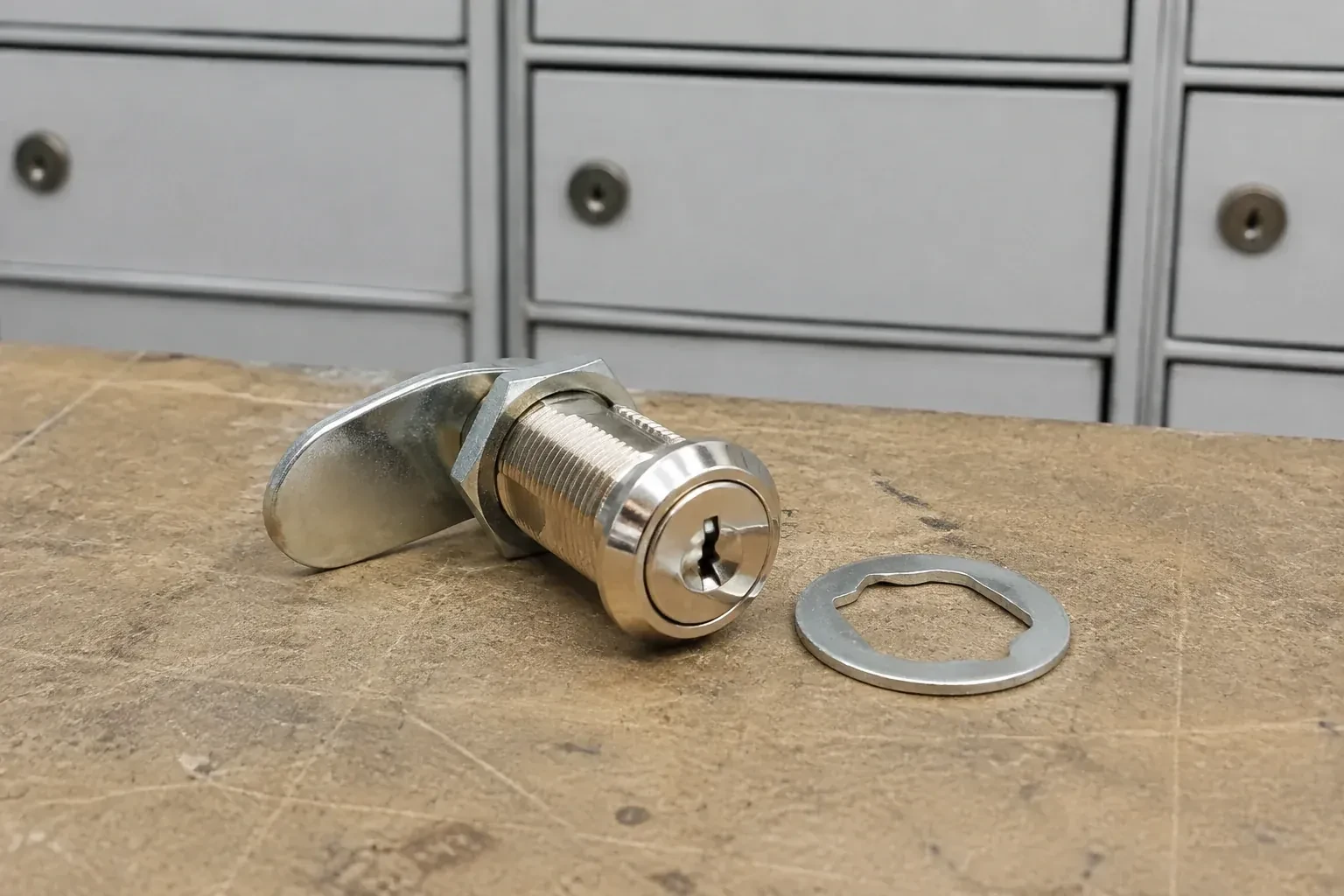
Small outdoor cam locks take a beating over a Canadian winter: road spray, salt, and repeated freezing leave the keyway gritty and the cylinder stiff long before the metal actually fails. Replacement at that point is straightforward, since the lock is a self-contained unit that unscrews from inside the compartment door. The new cylinder goes in following its own maker's lubrication instructions from day one, and a couple of fresh keys mean the whole assembly turns smoothly again.
How the visit goesThe little brass key for your curbside mailbox was on the same ring as the one you lost at the gym last week. The lock itself is fine, but whoever finds that ring now has a way into your mail as well.
Kitchener
How the visit goes
How the old lock is held in
Most small mailbox locks are held in place from the inside of the compartment door by a nut, a spring clip, or a pair of small screws, rather than by anything visible from the front. Reaching that fastener means opening the compartment first, which is straightforward if a working key is still available and slower if it is not. Years of moisture and road salt can seize the fastener itself, and the locksmith checks for that early, since a corroded retaining nut changes how the old lock has to come out.
Taking out the old lock
With the compartment door open, the old lock is usually removed from the inside: a retaining nut is unscrewed with a small wrench or nut driver, or a spring clip is pressed free, and the whole cylinder and cam lift out as one piece. When the compartment cannot be opened this way because the key is lost, snapped, or simply unknown, picking or decoding is tried first, and the lock is drilled only when that is not practical, aimed precisely at the wafers so the plug turns and the housing releases without damaging the door around it. Either route ends the same way, with an open hole ready for the matched replacement.
The old key stops mattering
Whatever became of the previous key, lost on a trip, left behind by someone who moved out, or simply unaccounted for, it now fits nothing. The cylinder inside the compartment has been swapped rather than repaired, so a key that used to work is just a piece of shaped metal from this point on. That is the entire point of choosing replacement over a repair when the concern was really about who else might have held a copy.
Mailbox Lock Replacement
In the van
- Replacement compartment hinge
- Cam lock cylinder
- Drill and drilling guide
- Wafer tumbler pick set
- Retaining nut or clip
What affects the quote
Same fees day, night or weekend
1Corrosion or ice
A lock stiffened by rust or frozen solid needs patient freeing before it can even be assessed, which adds time compared with a lock that opens and closes normally.
2Access to the compartment
A ground-floor mailbox or a lobby panel with easy entry is straightforward to reach. A building requiring a call to reception, an escort, or a separate access arrangement adds a step before work can start.
3Cam length and orientation
An uncommon cam length, angle, or throw can mean sourcing a less standard replacement or adapting an available one, rather than reaching for the most common size on the shelf.
Mailbox Lock Replacement: questions
Is a mailbox lock the same kind of lock as a house door?
The mechanism is related but smaller: many mailbox locks use flat wafer tumblers rather than the pin-tumbler cylinders found in most house doors, and some use a tubular, or barrel-key, design instead. The keyway, the tools that open it, and the way it is measured for replacement all differ from a deadbolt, even though both are picked or decoded using similar principles.
Can a frozen mailbox lock be opened without breaking it?
Usually, yes. A penetrating lubricant or a lock de-icer given a little time to work, combined with gentle movement of the key or a light pick, frees most iced-up compartment locks without forcing anything. Hot water is avoided, since it can refreeze inside the mechanism. Once it turns freely, the lock is inspected and, if it shows wear or damage, replaced with a fresh one lubricated as its own maker specifies, since a lock that has frozen once can repeat the pattern.
Do neighbouring mailboxes in the panel get disturbed during the work?
No. The work is confined to the named compartment or compartments. Neighbouring doors keep their existing locks and keys, and the panel's frame, hinges, and shared structure are left as they are. Even during a larger job covering many compartments, each one is handled as its own small task rather than as one blanket change across the whole panel.
Change or Rekey Locks
Mailbox Lock Replacement near you
Use this list to find the lock service that fits your situation in Kitchener. Openings for lockouts. Rekeys and lock changes for new owners and departing tenants. Deadbolts and high-security hardware for people who want more from their door. Commercial hardware and master keys for businesses. Safes. Keys of every kind.