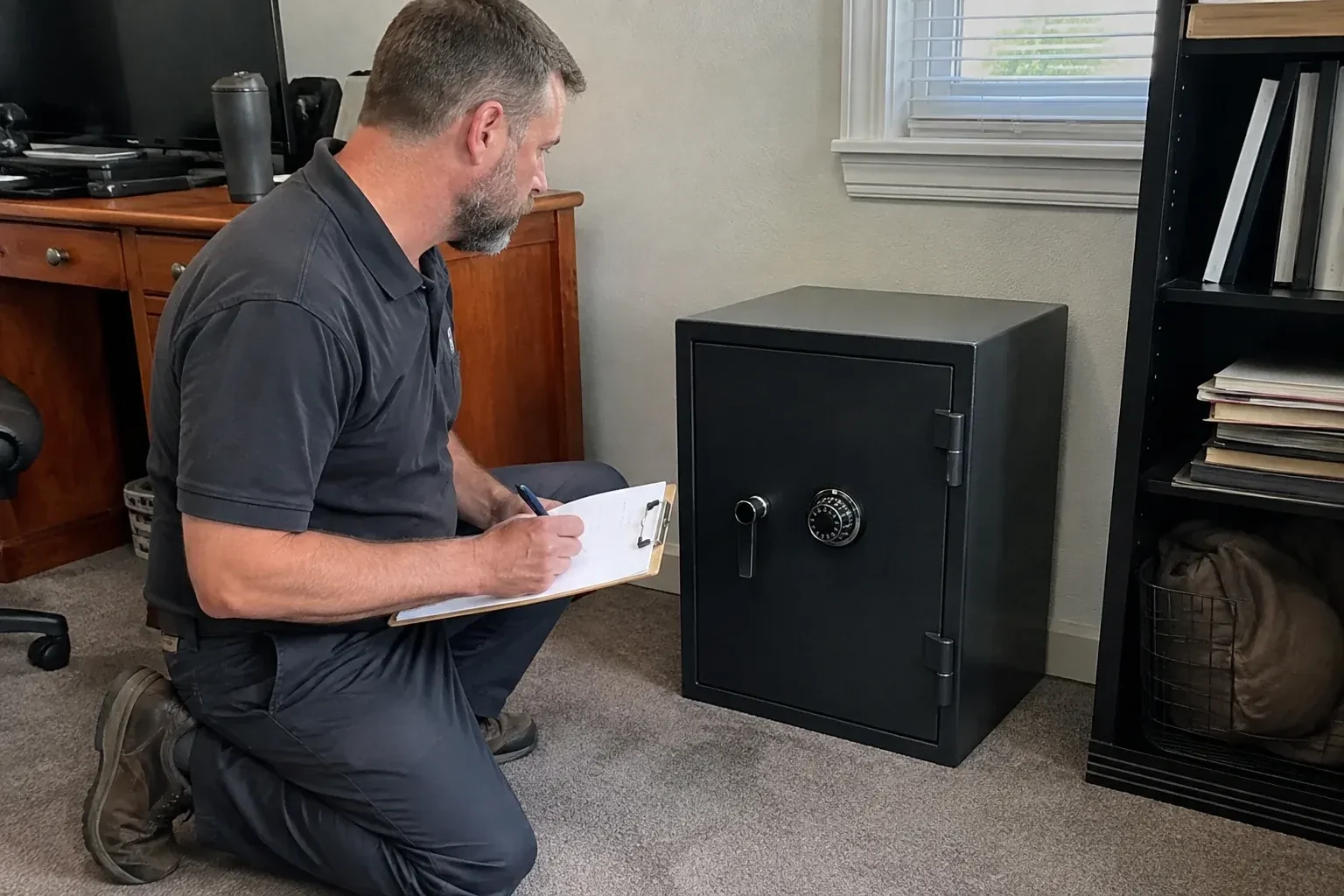
High security · Kitchener
Safe Opening & Combination Change
A software update reset the clinic's small safe overnight, and the receptionist's usual code now does nothing on a keypad that lights up but goes no further.
Safe Opening & Combination Change
In plain words
Once a safe is open, the visit is only half finished. The lock is inspected for wear, corrosion or damage that caused the original problem, repaired or replaced if it is no longer reliable, and then set to a new combination chosen on the spot. That combination is cycled several times with the door both open and closed so everyone leaves confident it will work again on the next ordinary morning, not just once under supervision.
How the visit goesThe bookkeeper who set the office safe's code retired in a hurry, and the float cash for tomorrow's registers is sitting behind a keypad nobody else in the building can operate.
Kitchener
How the visit goes
Checking the bolt work and handle
A locked-out safe is not always a locked-out lock. The locksmith checks whether the handle turns normally, whether the bolt work is retracting at all, and whether resistance shows up at the handle rather than at the dial or keypad. A jammed bolt, a corroded linkage or a relocker that has dropped into place can all hold a door shut even when the correct combination is entered without complaint. Sorting this out before assuming the lock has failed avoids replacing a perfectly good combination lock to solve a mechanical problem that sits elsewhere in the door.
Drilling through a chosen, repairable point
When manipulation, decoding and the electronic reset path all fail to open the safe, drilling is explained to the owner before it begins, aimed at a specific point the lock manufacturer's own service documentation identifies as both reachable and safe to repair afterward. A borescope is used through the drilled hole to view the lock's internal parts directly and manipulate or bypass them without further damage. The aim is to affect nothing beyond that single hole, patched or plugged as one of the last steps of the visit, though the number of holes needed and any effect on the safe's rated protection level depends on its construction and is addressed with the manufacturer's approved repair method.
A plan for the day this happens again
Most safes that needed a reset today will need one again eventually, whether from a future staff change, a forgotten code, or simple wear on an aging lock. Deciding now who is responsible for passing the combination along when roles change, keeping a written record somewhere secure, and having the safe's model and service history noted somewhere accessible all make the next visit shorter and simpler than this one. None of this is required before the locksmith leaves, but a few minutes spent on it now is the difference between a short reset next time and starting from an unknown safe all over again.
Safe Opening & Combination Change
In the van
- Drill rig and carbide bits
- Repair plug and patch plate
- Dial decoding instrument
- Combination change key
- Spindle and drive cam
What affects the quote
Same fees day, night or weekend
1Whether model or service records are available
A visible data plate, a purchase receipt or a manual on hand speeds up identifying the exact lock; a safe with none of that takes a few extra minutes to assess on site.
2Timing of the call
A visit during regular business hours costs the same amount as one arranged outside them. The locksmith confirms the exact figure on site once the safe's lock type, size and condition have been looked at in person.
3Whether drilling turns out to be necessary
Manipulation, decoding and manufacturer reset paths are tried first; drilling, a repair plug and any replacement lock only enter the picture once those routes are exhausted.
Safe Opening & Combination Change: questions
How often should a safe combination be changed?
There is no fixed schedule; the sensible trigger is a change in who knows it, such as an employee or manager leaving, rather than a set number of months or years. A combination that has only ever been known to current staff generally does not need changing on a routine basis, since the lock itself does not wear out from correct use the way a mechanical part might.
Can you open a safe used to store firearms?
Yes, the opening itself proceeds the same way as for any other safe. Afterward, for a business, it is worth confirming the storage arrangement still meets the applicable federal requirements for secure firearms storage, since those cover the container, the surrounding room and who has access, separately from whatever caused the lock to need attention.
What if my safe is bolted to the floor or built into a wall?
The opening and combination work proceed the same way regardless of how the safe is mounted; access to the lock face, dial or keypad is what matters, not whether the case itself can be moved. A built-in or bolted safe simply means the locksmith works around its fixed position rather than moving it to a more convenient spot.
High Security Locks
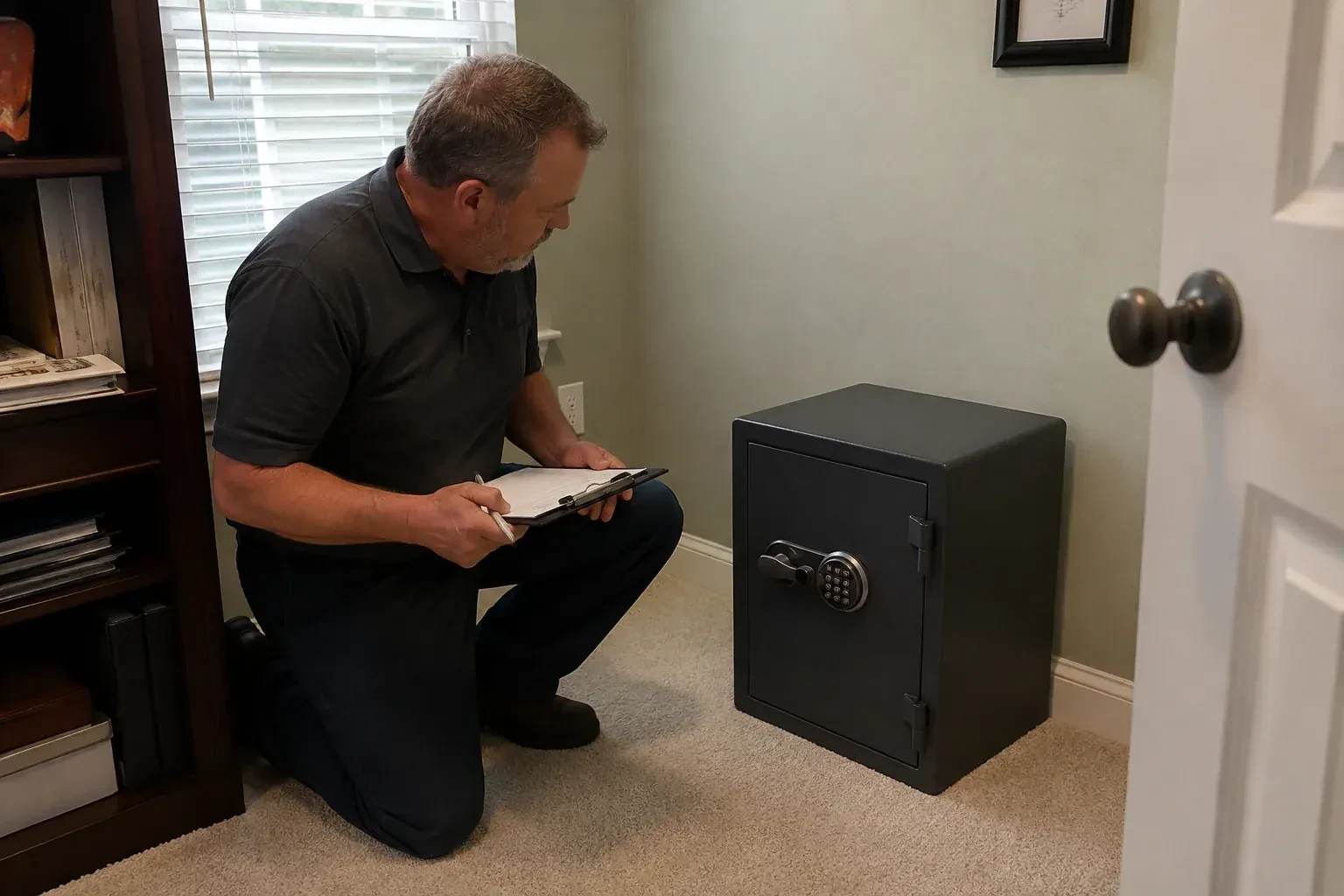
Safe Opening & Combination Change near you
Use this list to find the lock service that fits your situation in Kitchener. Openings for lockouts. Rekeys and lock changes for new owners and departing tenants. Deadbolts and high-security hardware for people who want more from their door. Commercial hardware and master keys for businesses. Safes. Keys of every kind.